01
Make one clear inventory
Gather only your disconnected spare cables. Match each one to the device or purpose you know. If a cable is unfamiliar, leave its compatibility unknown until you can check its markings and the device manufacturer’s information. Similar connectors do not establish equal charging or data capabilities.
02
Separate everyday and occasional use
Keep the cable you carry every day apart from backups that stay at home. Group the rest by a purpose that makes sense to you: camera accessories, audio equipment or a particular work kit. Avoid building a sorting system so detailed that putting things away becomes a chore.
03
Leave room around connectors
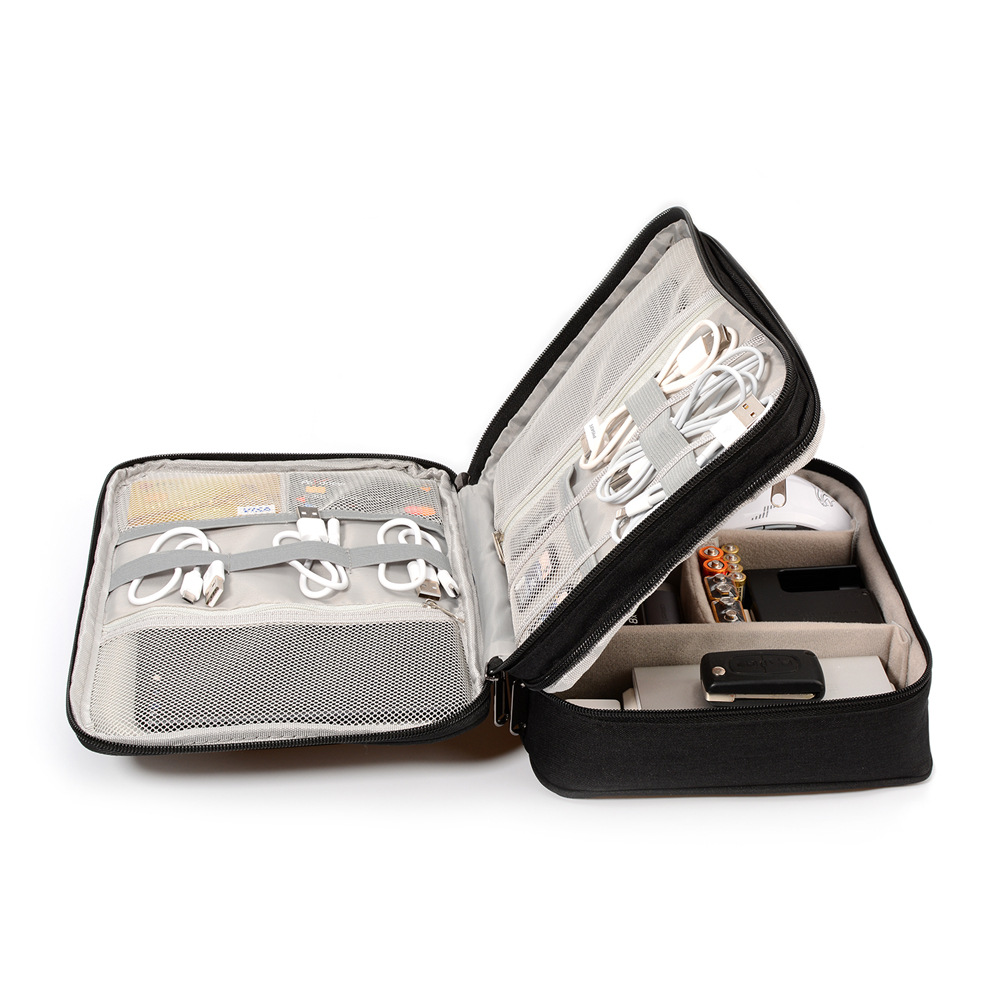
Follow the cable manufacturer’s handling guidance. Avoid forcing a cable into a tight shape or pressing a connector against the side of a case. When comparing storage, check usable interior dimensions and divider positions, not only the outside size. A cardboard outline can help you judge the footprint, but it cannot prove a particular case fits.
04
Label the uncertainty
A removable label can record a known device or purpose so you do not have to identify the same cable again. Do not label an unverified cable with a power rating, compatibility claim or certification. Keep product markings readable.
05
Keep storage separate from use
The cases discussed here are for disconnected storage. An empty case is not evidence of ventilation, heat protection or safe enclosed charging. Follow the device and charger manufacturers’ instructions when equipment is operating.
This guide offers general organization ideas. It is not a product test, certification or recommendation based on measured customer results.